Hurricane prep tips for small businesses
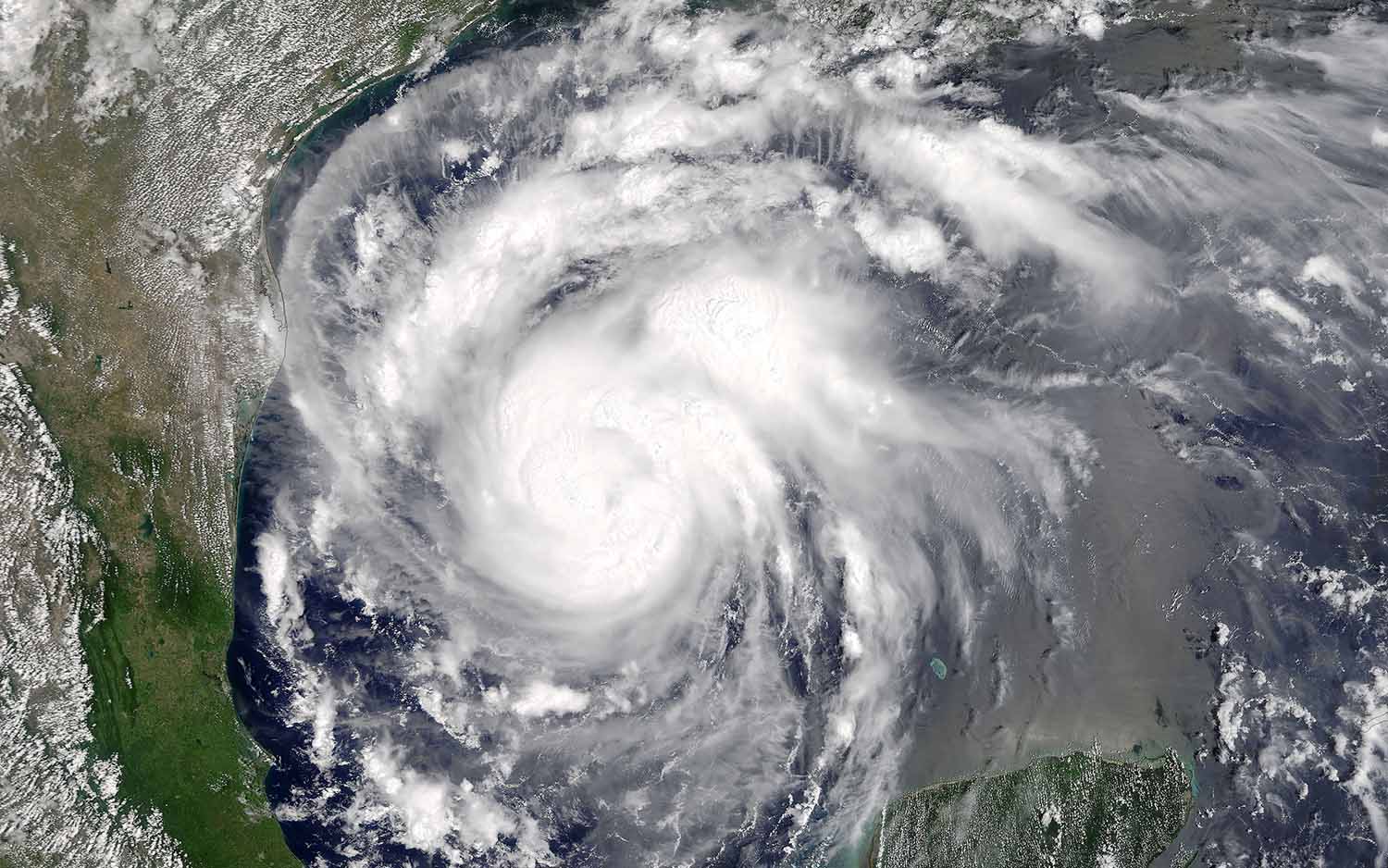
As hurricane season approaches, taking proactive steps can help minimize risk and loss for Gulf Coast small businesses. San Jacinto College’s Ali Shah, emergency management director, and Deanna Clark, manager of records management, share basic preparation tips.
What initial steps should business owners take to prepare for hurricane season?
Shah: Ensure that your business has the proper insurance coverage to recover from a hurricane. Coverage can be tricky and confusing with different policies, waiting periods, providers, etc., for different types of events. Speak to a commercial insurance professional to make sure your business is adequately covered.
How far in advance should preparation begin when a storm is forecasted?
Shah: Preparation should start 90 days before hurricane season starts, but operationalizing the plans should start when the storm enters the Gulf and is projected to impact our area. Since storms can vary in size, speed, and intensity, following guidance from trusted sources is vital. All our local news stations have apps, and their weather forecasting is very accurate in tracking storms.
What should a formal hurricane preparedness plan entail?
Shah: Preparedness, mitigation, response, and recovery. All four of these areas need to be addressed for a plan to be complete and functional as they feed into each other for a holistic strategy to deal with hurricanes that may impact a business.
Create a communication plan and share that with the employees. This will ensure that they know what to expect and when to communicate back with you. Have a backup plan for when the routine communication mechanisms fail.
What are ways to protect important documents, data, and inventory?
Clark: Make sure you have multiple copies of essential records in various formats and locations. The more copies the better in the event some are destroyed or damaged. We recommend using the 3-2-1 backup method: Have three copies in two different formats in at least one alternate location for each of your essential records. Having a paper copy (especially contact lists) is helpful in a power or network outage.
Avoid storing records in basements, on the floor, near windows, or near pipes as this makes them susceptible to water damage. If you only have records in a paper format, it is a good idea to digitize those so you have backup copies in case the paper record is damaged.
Shah: A weatherproof document storage box is best, but in a pinch, a large Ziploc type bag or waterproof bag will do.
Have past hurricanes taught us lessons about being proactive?
Shah: Absolutely, the National Institute of Building Sciences estimates that for every $1 spent on mitigation you save $6 on disaster related losses. Hurricanes Ike, Harvey, and Beryl all had a major impact on San Jac. Through robust pre-incident planning and prompt recovery activities, we minimized our losses and returned to normal operations.
What should people who haven’t experienced a major storm know?
Shah: We have been experiencing busier than usual hurricane seasons for the past few years, and it is not uncommon to have 20+ named storms, very few of which impact us directly. That can lead to complacency when you hear about another storm brewing. It is important to pay attention, though, as you never know which storm will track toward us, and time lost in preparation can lead to higher losses for the business.
Clark: Following a disaster, the first step is to assess the damage and stabilize your records.
This may require professional assistance. If your records are damaged, you can learn
how to salvage your records at archives.gov/preservation/disaster-response/salvage-procedures.
Interested in starting a small business?
The San Jacinto College Center for Entrepreneurship is offering a Small Business Management Academy certificate this summer, Tuesdays and Thursdays, through Aug. 14, 6-8:30 p.m.
This eight-week course offers specialized training that will help entrepreneurs discover what is needed to successfully operate, sustain, and grow a business.
Registration is required. For more information, email: centerforentrepreneurship@sjcd.edu.
About San Jacinto College Surrounded by monuments of history, evolving industries, maritime enterprises of today,
and the space age of tomorrow, San Jacinto College has served the people of East Harris
County, Texas, since 1961. The College is ranked second in the nation among more than
1,100 community colleges, as designated by the Aspen Institute and was named an Achieving
the Dream Leader College of Distinction in 2020 and 2026. As a Hispanic-Serving Institution
that spans five campuses, plus an online college, San Jacinto College serves approximately
45,000 credit and non-credit students annually. It offers more than 200 degrees and
certificates across eight major areas of study that put students on a path to transfer
to four-year institutions or enter the workforce. The College is fiscally sound, holding
bond ratings of AA+ by Standard & Poor’s and Aa2 by Moody’s. San Jacinto College is
accredited by the Southern Association of Colleges and Schools Commission on Colleges.